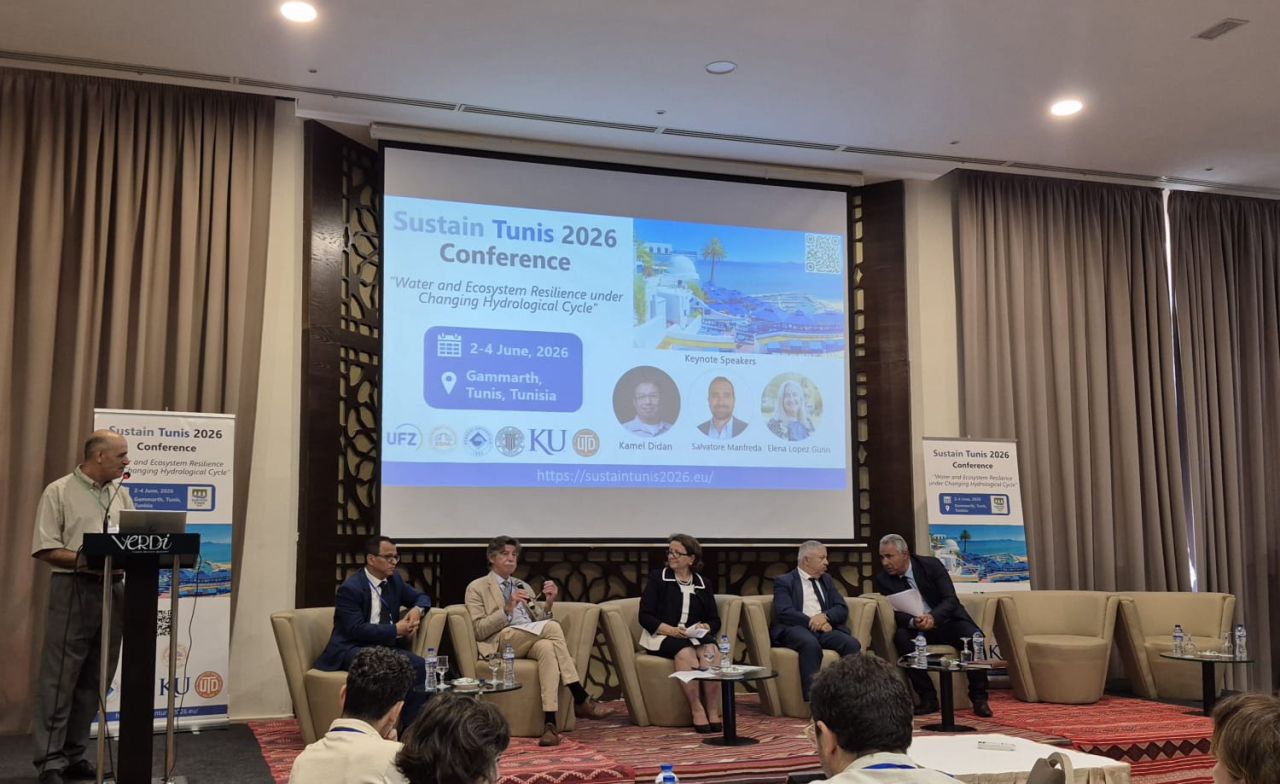
Last week, PRIMA representatives Director Octavi Quintana and Project Officers Eda Demir and Ali Rhouma were in Tunisia for a packed agenda of conferences, meetings and field activities, bringing together researchers, policymakers and stakeholders from across the Mediterranean.
At the heart of the visit is the participation in SUSTAIN TUNIS 2026 (https://sustaintunis2026.eu/), International Conference on Water & Ecosystem Resilience, taking place in Tunis from 2–4 June 2026.
The conference was organized within the framework of the PRIMA-funded OurMED project (https://www.ourmed.eu/), coordinated by Prof. Seifeddine Jomaa of the Helmholtz Centre for Environmental Research (UFZ), and brought together researchers, policymakers, practitioners, and stakeholders working to strengthen water security and ecosystem resilience across the Mediterranean region.
A week dedicated to Mediterranean Resilience
The conference SUSTAIN TUNIS was part of a broader week of activities focused on sustainable water management, environmental resilience, and regional cooperation.
The programme began on 1 June with a national workshop bringing together key Tunisian stakeholders to exchange lessons learned from PRIMA projects and other relevant initiatives implemented in Tunisia. The workshop provided an opportunity to discuss successful approaches, identify common challenges, and explore pathways for greater impact and scalability.
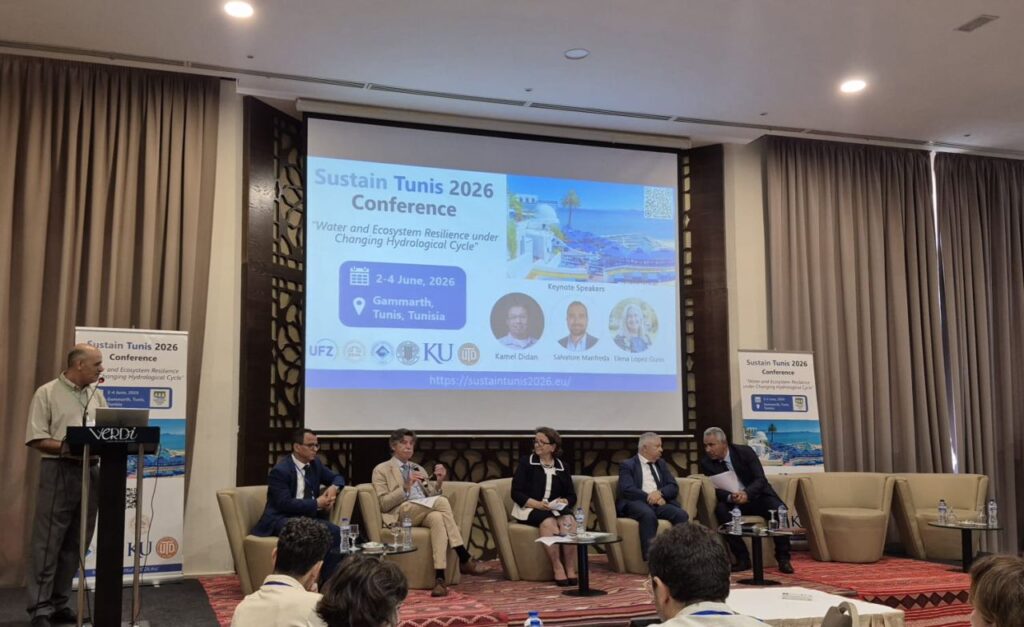
On 3 June, the spotlight turned to youth engagement and policy innovation through the NEXTGEN4MED Model-based Policy Exploration Workshop. The initiative, led by three PRIMA-funded projects, aims to empower young researchers and future leaders by strengthening their capacity to contribute to evidence-based policymaking in the Mediterranean region.
The week concluded with the OurMED Final Consortium Meeting on 5 June, where project partners reviewed the project’s main achievements, discuss lessons learned, and explored opportunities for future collaboration and synergies across Mediterranean initiatives. The meeting was also attended by PRIMA Project Officers Eda Demir and Prof. Ali Rhouma.
On June 5, Prof. Ali Rhouma contributed to the Tunisian Youth Forum for sustainable future, empowering Tunisian Youth through the WEFE Nexus, where he presented “The Water–Energy–Food–Ecosystems Nexus: A Pathway to Climate Action and Sustainable Development”. A key moment of the week was dedicated to youth, an important audience for PRIMA, with the launch of the Youth Innovators in the Mediterranean Award this year.
Field Visit to the OUR MED Project Demonstrators in Tunisia
The PRIMA team took to the field this week to visit the Tunisian demonstration sites of the OUR MED Project. On Friday 5 June, Ali Rhouma visited Ghar El Melh, a remarkable site in northern Tunisia that holds two Ramsar designations and stands as the first Ramsar City in the North African region, making it a true hotspot for wetland biodiversity and water dynamics. A Ramsar site is a wetland of international importance designated under the Ramsar Convention, an environmental treaty signed on 2 February 1971 in Ramsar, Iran, under the auspices of UNESCO.
On 6 June, Eda Demir visited the Medjerda pilot site, located near the Medjerda River basin, a transboundary river flowing from northeast Algeria through Tunisia before emptying into the Gulf of Tunis. Spanning some 23,700 km², the basin experiences a mild temperate climate with dry summers, and the site’s cross-border character, combined with its two Ramsar sites and Ramsar City status, makes it a key focus for wetland conservation and water management in the region.
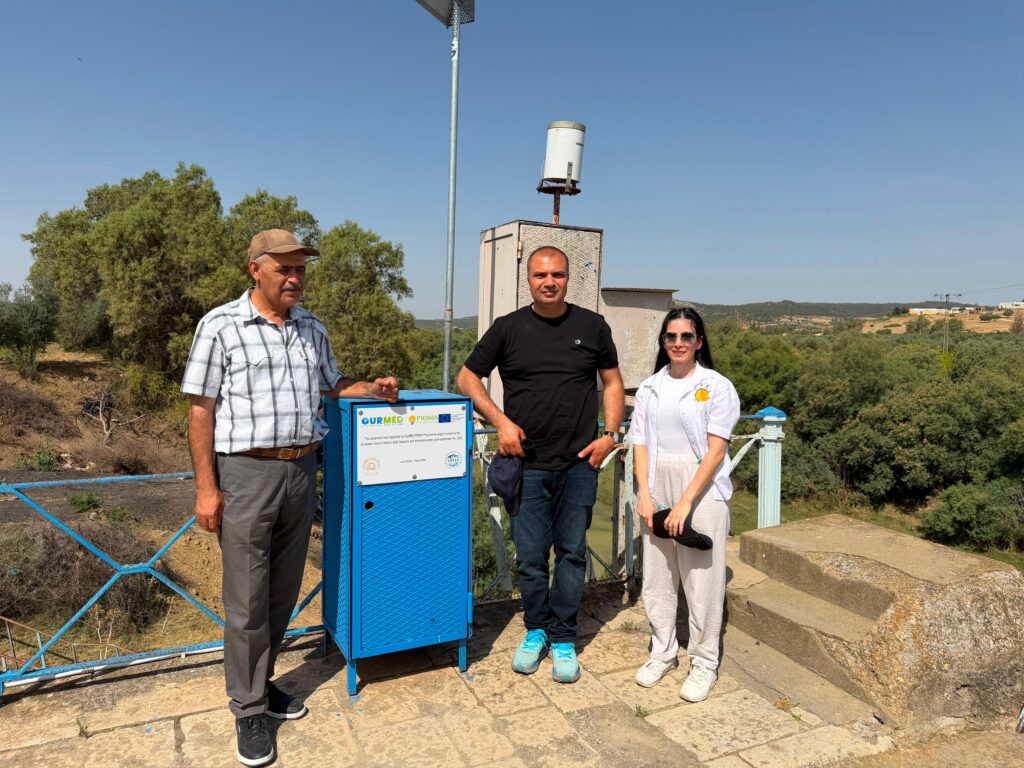
Project Officer Eda Demir with the OURMED projects partners and Coordinator Seiffedine Jomaa (UFZ), at the Medjerda River basin demonstrator site
Strengthening Strategic Partnerships
Beyond the scientific programme, the PRIMA delegation also met with Tunisian authorities and key stakeholders.
PRIMA representatives Prof. Ali Rhouma and Octavi Quintana met with Prof. Mourad Bellassoued, Chief of Staff to the Tunisian Minister of Higher Education and Scientific Research. Discussions focused on Tunisia’s strong engagement in PRIMA and the future development of PRIMA 2.
Tunisia has established itself as one of the most active participants in the partnership, with involvement in 195 PRIMA projects. During the meeting, Prof. Bellassoued reaffirmed Tunisia’s full support for PRIMA 2 and highlighted the importance of coordinated action among the PRIMA Participating States associated with the EU Research and Innovation Framework Programme.
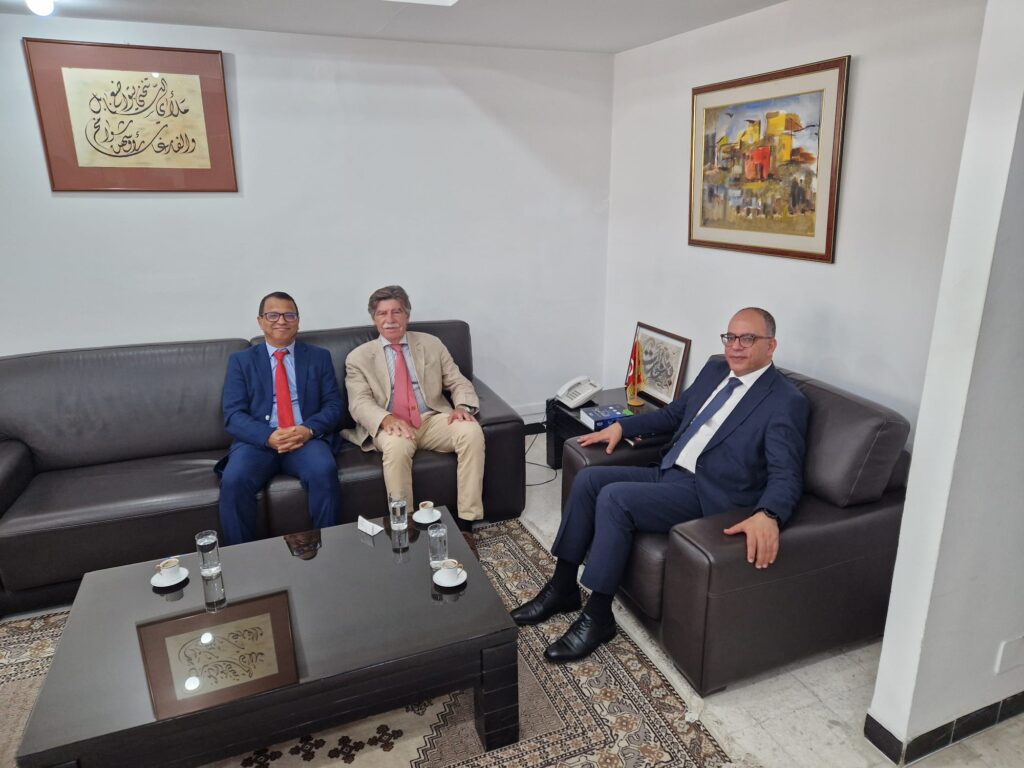
Prof. Ali Rhouma and Octavi Quintana met with Prof. Mourad Bellassoued, Chief of Staff to the Tunisian Minister of Higher Education and Scientific Research
The discussions also addressed one of the key challenges facing research and innovation initiatives: the scalability of project results. Particular attention was given to the role of the private sector, especially small and medium-sized enterprises (SMEs), in validating, adopting, and scaling innovative solutions developed through PRIMA-funded projects. Strengthening SME involvement will be essential to transforming research outcomes into tangible socio-economic benefits across the Mediterranean region.
The PRIMA delegation also participated in meetings hosted by the Spanish Embassy in Tunis, bringing together representatives from the Tunisian Ministry of Higher Education and Scientific Research, the Ministry of Agriculture, IRESA, AECID, the Instituto Cervantes, and other strategic partners. These exchanges focused on PRIMA’s contribution to regional cooperation and on opportunities to further enhance the impact of research and innovation activities in the Mediterranean.
Additional meetings with Tunisian authorities, including representatives of the Ministry of Agriculture, are scheduled throughout the week.
Research, Innovation and Cooperation in Action
The events taking place in Tunisia this week demonstrate the strength of the Mediterranean research and innovation community and the importance of connecting scientific excellence with policy dialogue. Through conferences, workshops, institutional meetings, and field activities, PRIMA continues to foster collaboration, promote sustainable solutions, and support resilient water and food systems across the Mediterranean region.
As Tunisia continues to play a leading role within the partnership, this week offers an important opportunity to showcase achievements, strengthen strategic cooperation, and prepare the ground for the next phase of Mediterranean research and innovation under PRIMA 2.