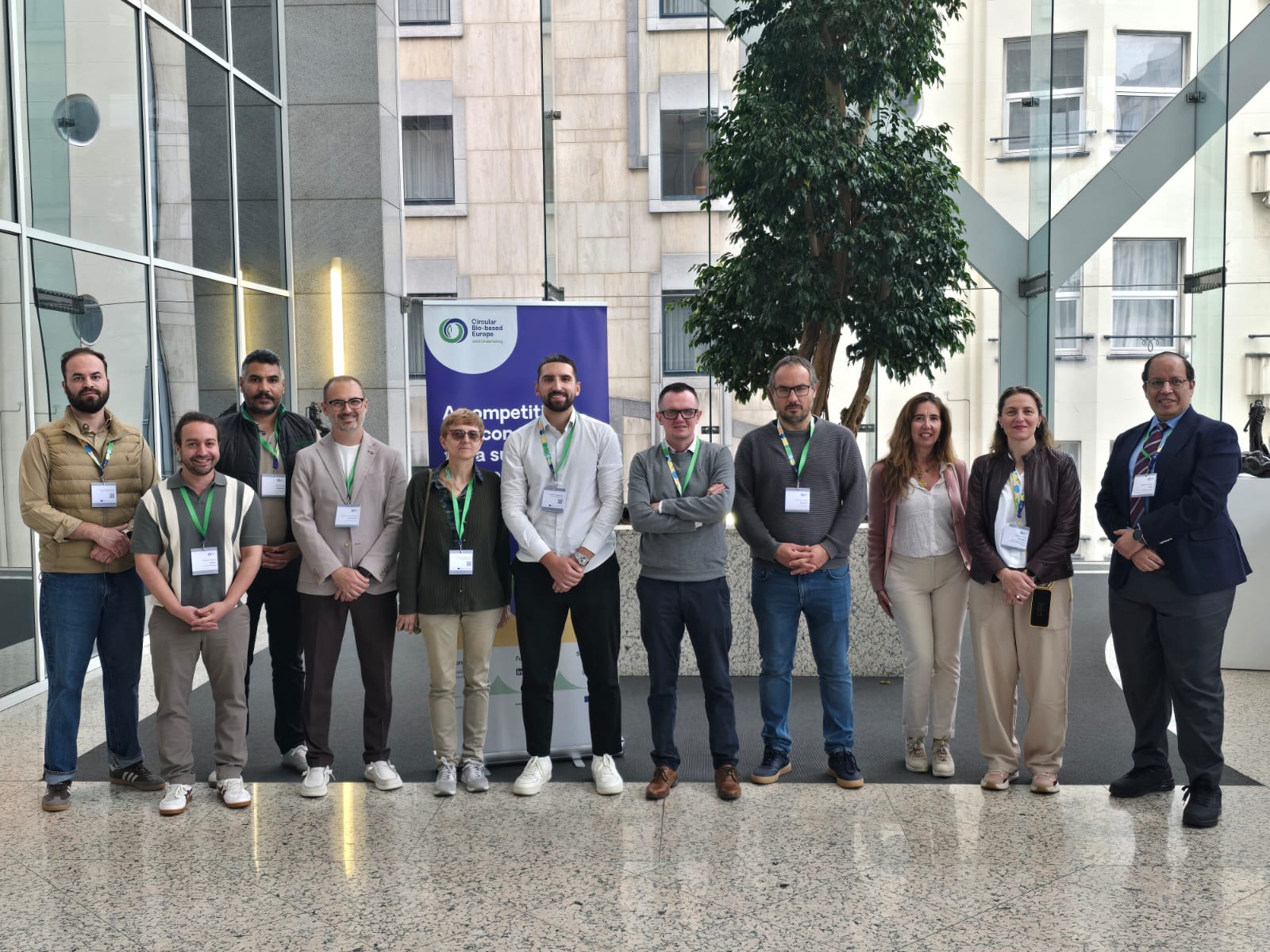
Brussels, Belgium, 9th June 2026. PRIMA and nine of its funded projects participated today in the CBE JU Cluster Projects’ Workshop on Food & Feed, organized by the Circular Bio-based Europe Joint Undertaking (CBE JU). The event brought together leading EU-funded initiatives to discuss and showcase the latest innovations in bio-based food and feed ingredients, while fostering knowledge exchange, networking, and new synergies across European research and innovation communities.
PRIMA was invited by the CBE JU team to contribute to the workshop and highlight the growing impact of Mediterranean innovation in the food and feed sector. Representing PRIMA were Antonella Autino, PRIMA Programme Manager, and Mohamed Wageih, PRIMA Project Officer, alongside Jesús Alquézar from the European Commission and representatives from nine PRIMA-funded projects.
Food and feed ingredients represent one of the most significant areas of investment within the European bioeconomy landscape. The workshop provided a valuable platform to explore solutions based on agricultural, aquatic, and other biological resources, including the valorisation of biogenic CO₂ and biomass streams.
The 9 PRIMA projects featured at the workshop
OLIWA
Coordinated by: Maria Teresa Capucchio, University of Turin
The project in a nutshell: OLIWA turns olive waste into a resource by using it to rear insects for animal feed, develop biopackaging, and produce biogas, adopting a fully circular, zero-waste approach.
Key messages for the workshop: Mediterranean olive by-products can be transformed into innovative feed ingredients, functional additives, and sustainable packaging, reducing food waste and dependence on imported feed.
CIPROMED
Coordinated by: Christos Athanassiou, University of Thessaly
The project in a nutshell: CIPROMED builds circular protein value chains by routing agri-industrial side-streams through insects, microalgae, legumes, and fermentation, with residues re-entering the system to close the loop.
Key messages for the workshop: Agricultural leftovers are not waste but raw materials. Producing protein this way generates 30–50% less greenhouse gas than conventional agriculture, while reducing Europe’s dependence on imported protein and enabling a local, circular approach to Mediterranean farming.
AGRI BIO PACK
Coordinated by: Francesco Donsì, University of Salerno
The project in a nutshell: The project valorises Mediterranean crop residues to produce microbial cellulose and bioactive compounds, turning them into smart, active bio-based packaging materials.
Key messages for the workshop: Agrifood residues can become intelligent packaging that actively extends shelf life, reduces food waste, and lowers the environmental cost of packaging itself, waste from the food system becomes the material that protects it.
3D-STELLAR
Coordinated by: Nicolas Vincent, University of Lorraine
The project in a nutshell: 3D-STELLAR converts olive mill wastewater into reusable irrigation water and biochar-based soil amendments using solar distillation and flash pyrolysis, with a mobile semi-pilot plant deployed in the field.
Key messages for the workshop: Food system resilience goes beyond food and feed. Treating wastewater as a bio-based resource closes the loop on water, soil, and waste management, combining renewable energy and circular bioeconomy principles in a Mediterranean context.
NEWFEED
Coordinated by: David San Martín, AZTI Foundation
The project in a nutshell: NEWFEED applies innovative bioprocessing, hydrolysis, fermentation, and stabilisation, to convert grape stem, orange peel, and olive cake into safe, nutritionally enhanced feed ingredients, validated at pilot scale in livestock trials.
Key messages for the workshop: Closing the loop in feed production is already feasible. Circular feed solutions are not only environmentally necessary but technically viable and ready for market uptake across the Mediterranean and beyond.
PROXIMED
Coordinated by: Özlem Özmutlu Karslioglu, Hochschule Weihenstephan-Triesdorf
The project in a nutshell: ProxIMed introduces sustainable plant-based and novel protein sources through eco-friendly processing, developing over 20 food prototypes validated with consumers across 9 countries.
Key messages for the workshop: Sustainable high-tech proteins are ready to move from the lab to the international market. ProxIMed is scaling not just processes and ingredients, but a commercial pathway for the future of sustainable Mediterranean food systems.
QUIPACK
Coordinated by: Sandra Schmöckel, University of Hohenheim
The project in a nutshell: QUIPACK develops chitosan-based antimicrobial packaging from agri-aquacultural waste, embedding bioeconomic sustainability principles into packaging design from the outset, for both European and Maghreb markets.
Key messages for the workshop: Packaging is an active part of the food system, not just a container. Valorising waste streams from quinoa and aquaculture can deliver biointelligent materials that tackle food safety and waste reduction together.
SAFOOD4MED
Coordinated by: Giovanni De Francesco, University of Perugia
The project in a nutshell: SAFOOD4MED converts Mediterranean agri-food waste into biodegradable antimicrobial bioplastics through a decentralised, digitally integrated biorefinery model designed to support small-scale farmers.
Key messages for the workshop: Agri-food waste can become high-value sustainable products. Antimicrobial packaging improves food preservation, reduces spoilage, and decentralised biorefineries can create new economic opportunities for rural Mediterranean communities.
BIOteam
Coordinated by: Nour Elhouda Mekhadmi, University of Eloued, Algeria
The project in a nutshell: BIOteam develops biological and nanotechnology-based solutions (including nanoparticles, plant extracts, and biodegradable biopolymers) to control mycotoxin-producing fungi in cereal grains across the Mediterranean Basin.
Key messages for the workshop: Eco-friendly and biological approaches can effectively reduce mycotoxin contamination in cereals, improve food safety, and support climate-resilient agriculture. International collaboration is essential to strengthen food security across the Mediterranean region.
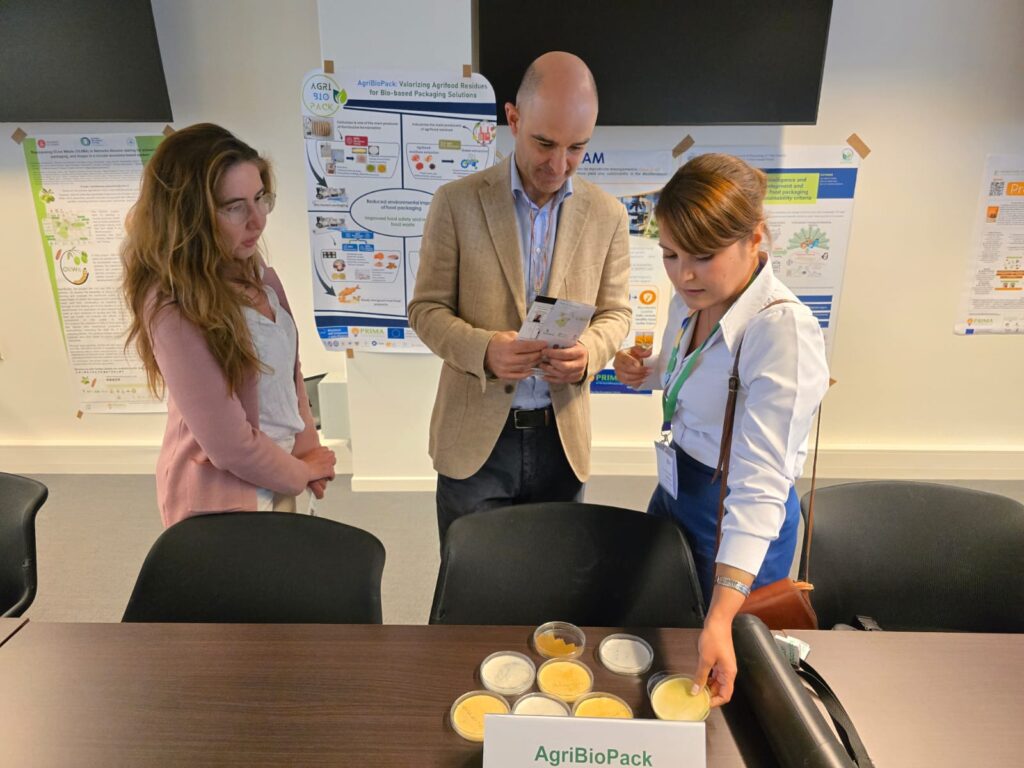
Antonella Autino (PRIMA), Jesús Alquézar (European Commission) and Dr. Fatemeh Mojarradi, representing the AGRIBIOPACK project.
From Research to Market Impact
Reflecting on the significance of the projects presented, Mohamed Wageih, PRIMA Project Officer, highlighted the importance of accelerating market adoption:
“The next frontier isn’t the lab, it’s the regulation and the market. The Mediterranean has always turned scarcity into opportunities. The question isn’t whether bio-based food and feed can work, it’s how fast we let it.”
Antonella Autino, PRIMA Programme Manager, emphasized the practical relevance of the innovations being developed:
“What I find particularly meaningful is that these projects start from very concrete Mediterranean challenges—agricultural residues, food by-products, water scarcity, packaging waste, and food safety—and turn them into opportunities for circular innovation. They show that the Mediterranean can be a real laboratory for Europe’s circular bioeconomy: practical, place-based, and ready to connect research with impact.”
Building Synergies
The workshop highlighted the growing convergence between PRIMA and other European funding initiatives in advancing sustainable food and feed systems. By bringing together projects working across the bioeconomy value chain, the event created opportunities for collaboration, knowledge exchange, and future partnerships.
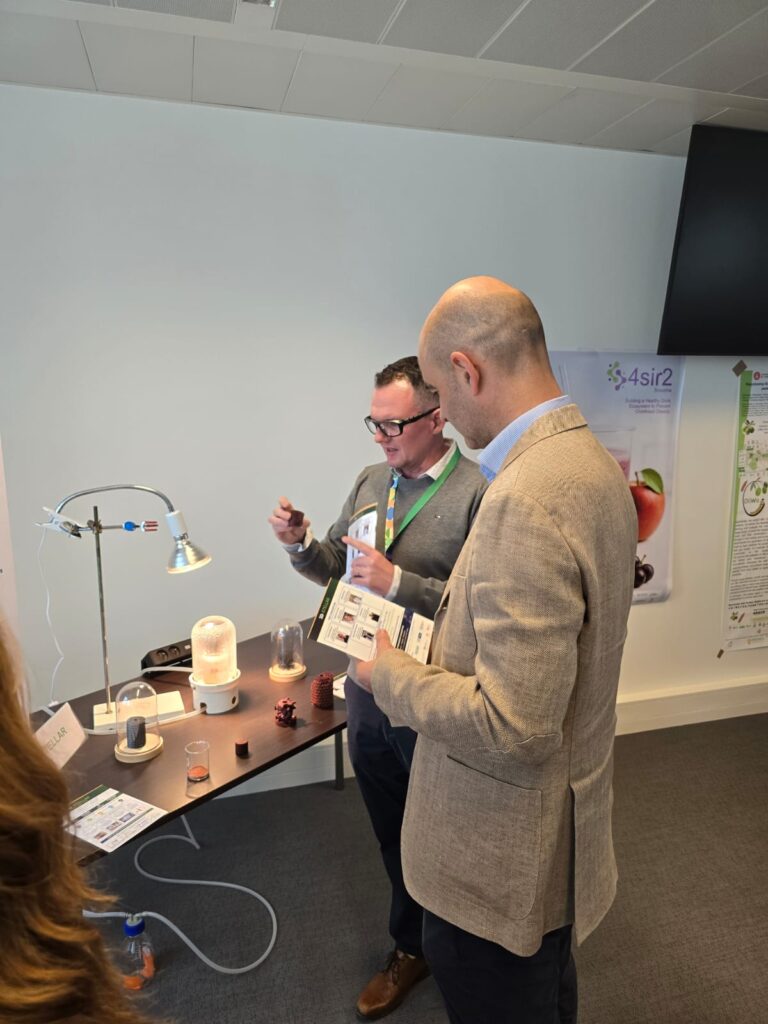
Vincent Nicolas, coordinator of the 3D-STELLAR project
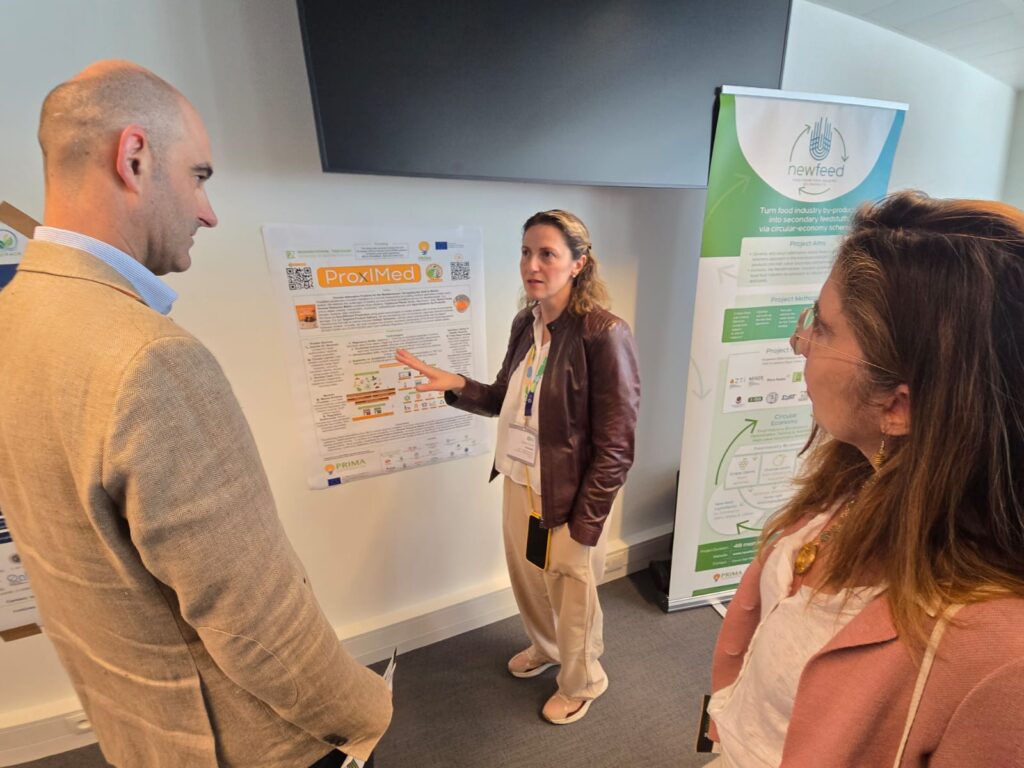
Prof. Dr. Özlem Özmutlu Karslioglu, Coordinator of the PROXIMED project
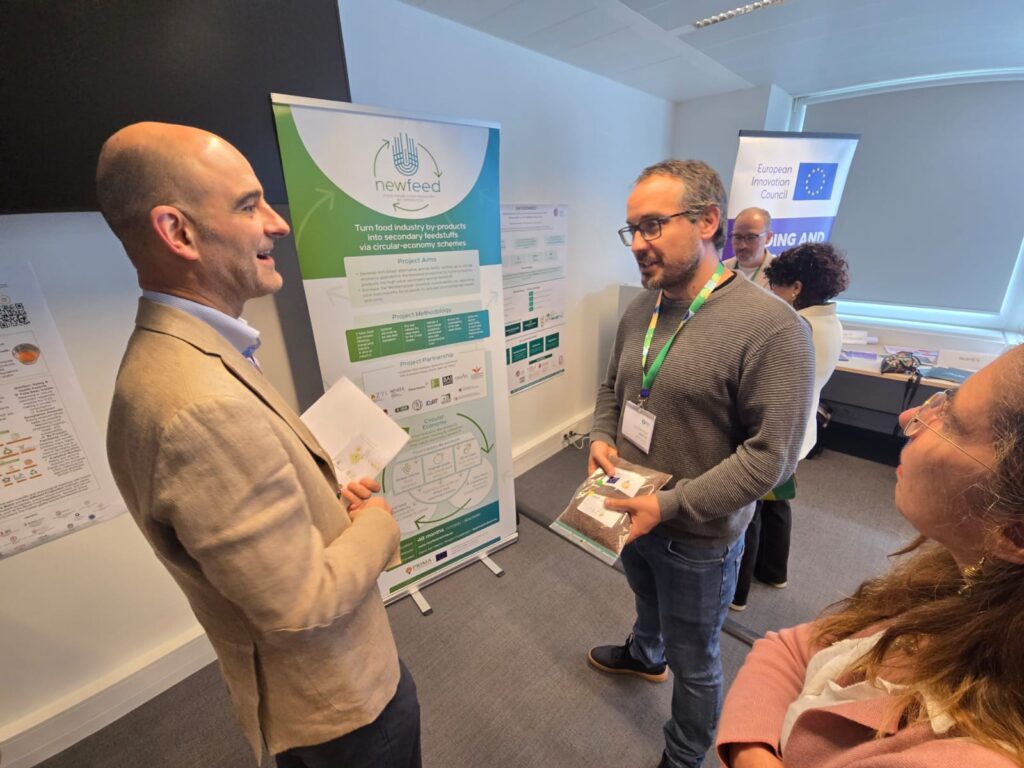
NEWFEED project, represented by its coordinator David San Martin
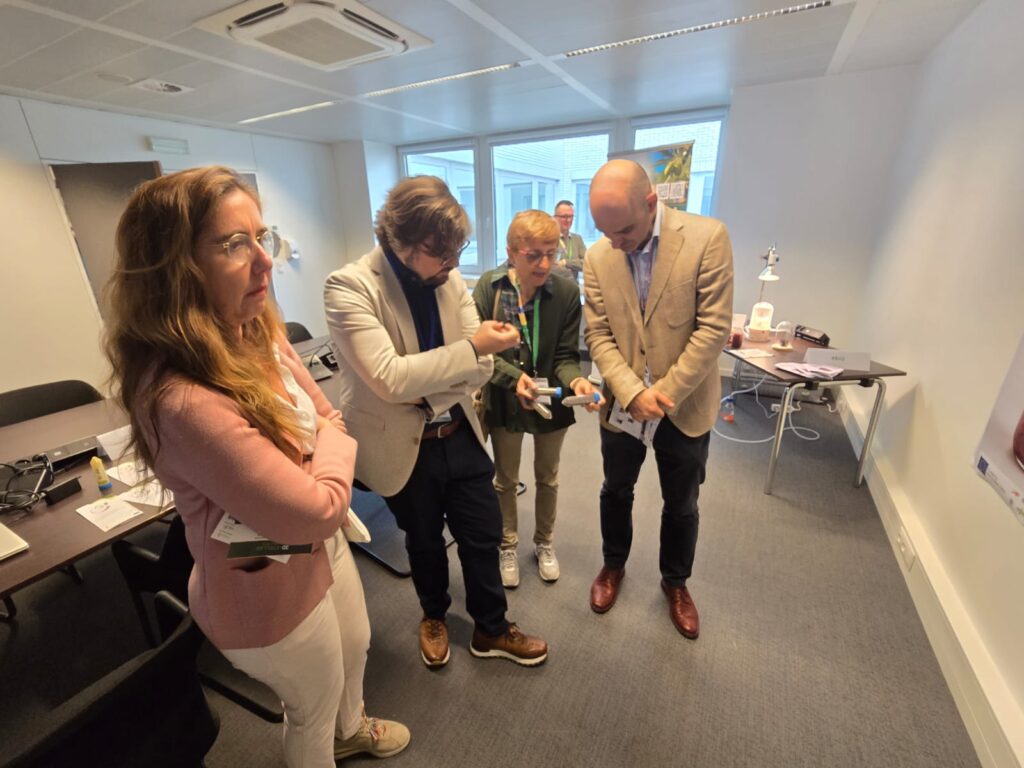
OLIWA project & Coordinator DR. Maria Teresa Capucchio
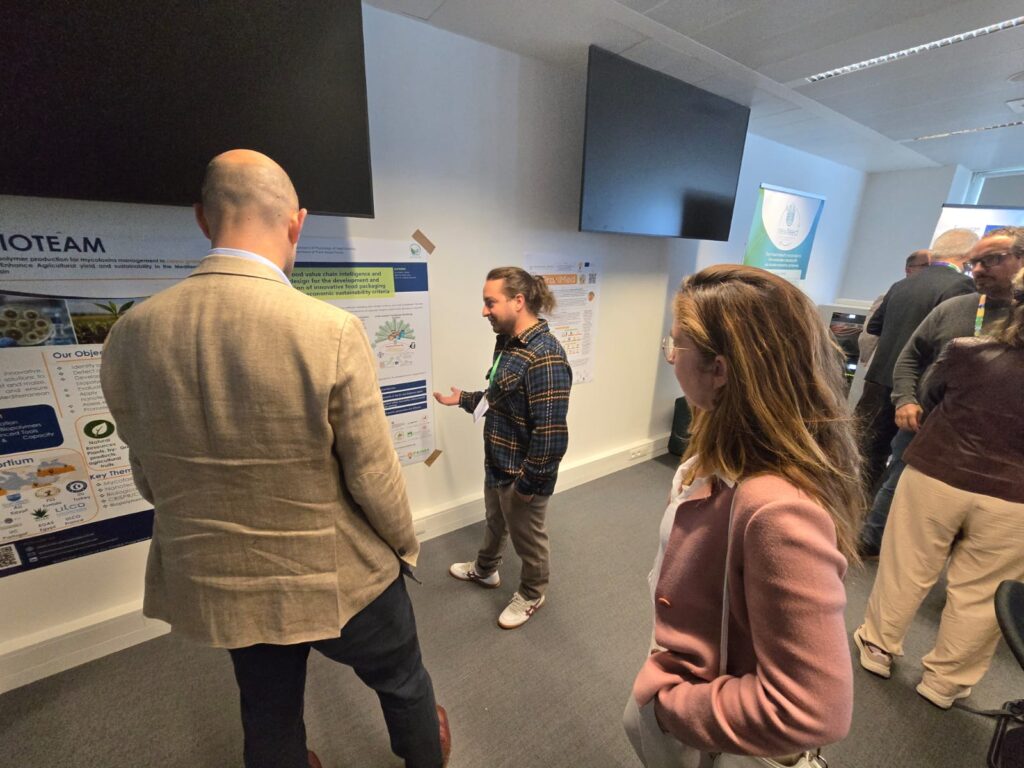
BIOTEAM project
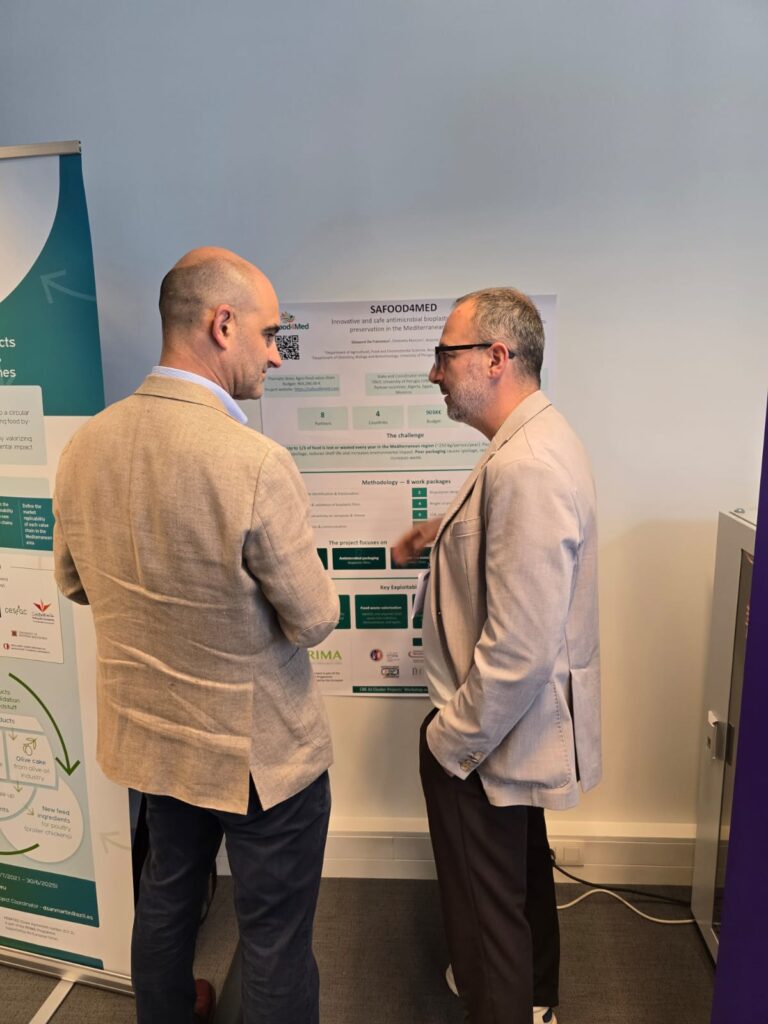
SAFOOD4MED, with coordinator Giovanni De Francesco